Rachael
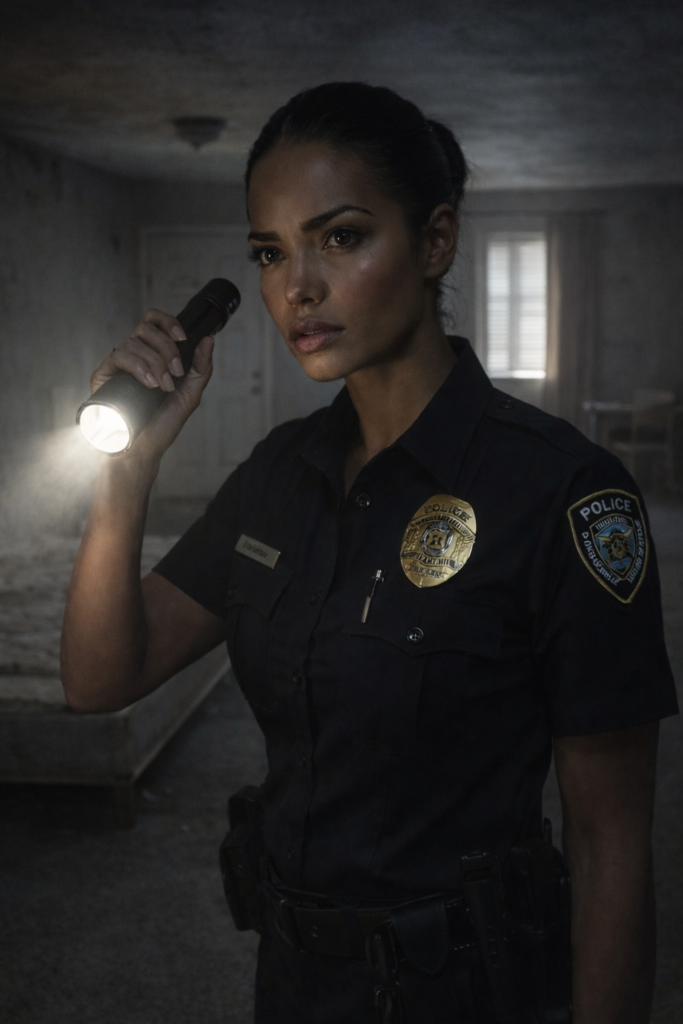
Rachael
The address didn’t match the motel.
Different part of town. Quieter. Buildings were set back farther from the road. No steady foot traffic, no open doors, no one drifting between units at all hours. It looked cleaner.
At a glance.
Roman pulled into the lot and cut the engine.
Two stories. Beige siding. Exterior walkways. The kind of place that passed inspection just well enough to stay open and just poorly enough that no one important ever came through.
Cars lined the curb.
Most of them older. A few with out-of-state plates.
I scanned the windows.
A curtain shifted on the second floor.
Then went still.
Roman saw it too.
He didn’t say anything.
Just opened his door.
“Stick with me,” he said.
I stepped out. “I always do.”
“I know.”
First floor.
The difference hit immediately.
The outside was far more maintained compared to the inside.
Stale air. Old smoke. Something sour baked into the siding and never washed out. Doors lined the walkway—some reinforced, some barely holding together. Too many locks on some. None on others.
I slowed near the base of the stairs.
Roman didn’t.
He was already moving, eyes tracking everything without stopping on anything.
Halfway down the walkway, a door cracked open just enough for someone to look out.
Then shut.
I angled my head toward it. “You see that?”
“Yeah.”
He didn’t break stride.
“Tenant?” I asked.
“Or someone who doesn’t want us here.”
A beat.
I glanced toward the unit numbers. “Manager’s probably on the first floor.”
“If there is one,” he said. “And if they’re not hiding upstairs.”
We found the office near the end of the row.
Door half shut. Light on inside.
A paper sign was taped crooked to the glass.
MANAGER — PLEASE KNOCK
Roman didn’t hesitate.
He knocked once.
Firm.
Movement inside.
Something scraping. A chair, maybe.
Then footsteps.
The door opened a few inches.
A man looked out. Late forties. Unshaven. Eyes already calculating.
“What?”
Not a question.
Roman held his gaze.
“FBI,” he said, calm. “We need to ask you a few questions.”
The man’s expression shifted.
Subtle.
But there.
“Don’t know anything,” he said immediately.
And started to close the door.
Roman moved faster.
His foot slid into the gap before it could shut.
The door hit it with a dull stop.
The man looked down.
Then back up.
Roman didn’t raise his voice.
Didn’t change his posture.
“Yeah,” he said quietly. “You don’t want to do that.”
A beat.
The man hesitated.
Roman held him there with nothing but eye contact.
Then, slowly, the door opened wider.
“What’s this about?” he said.
“We’re following up on a tenant. Lena Voss.”
The man’s posture shifted immediately.
“Yeah, I—she hasn’t been around,” he said. “I was actually about to—”
“How long has she been gone?” Roman asked.
The landlord hesitated, thinking.
“A couple of weeks,” he said. “Maybe a little more.”
“Rent current?”
He made a face. “No. She’s late now. Wasn’t before. Always paid cash, on time. Then just… nothing.”
I glanced at Roman.
That mattered.
“Anyone come looking for her?” I asked.
The landlord shook his head. “No. No calls, nothing.”
Roman held his gaze a second longer.
“Mind opening the unit for us?” he said.
The landlord shifted again, uncomfortable now. “I mean… I don’t usually—”
“You’re not in trouble,” Roman said evenly. “We just need to take a look.”
“Got a warrant?” the man said.
Roman’s expression didn’t change.
“No.”
“Then you’re not going in,” he said. “Not without paperwork.”
His grip tightened on the door.
Like that settled it.
Roman leaned in just enough to close the space.
Not aggressive.
Not loud.
Just… closer.
“Here’s how this works,” he said.
The man didn’t respond.
Didn’t have to.
He was listening.
“If we leave,” Roman continued, calm, “we come back with a warrant. And when we do, we don’t just go into that unit—we go through your records, your leases, your maintenance logs, your code compliance.”
A beat.
The man’s jaw shifted.
“We find anything that shouldn’t be there, you don’t get to say you didn’t know.”
Silence stretched.
Roman didn’t rush it.
“You understand me,” he said.
It wasn’t a question.
The man swallowed.
Looked past Roman—like he was checking if anyone else was watching.
Then back.
“You can’t just—”
“We can,” Roman said.
Still calm.
Still level.
“And if this turns into something bigger than it needs to be, it won’t stay local. These are fed charges. Fed prisons.”
That landed.
I saw it.
The calculation shift.
Risk versus effort.
Paperwork versus problems.
Finally—
The man stepped back.
Just enough.
“Five minutes,” he muttered.
Roman didn’t smile.
Didn’t thank him.
He unlocked the door and stepped back.
I went in first.
The air hit me immediately.
Not rot. Not neglect.
Flat.
No heat. No movement. No trace of anything recent—like the space hadn’t been disturbed in days.
Roman came in behind me, leaving the door partially open.
The place was small.
The living room and kitchen barely separated. A narrow hallway led back.
Everything in it was… placed.
Not arranged. Not lived in.
Set.
The couch sat square to the wall, cushions unshifted. No creases. No indent where someone had been sitting for hours, or even minutes.
The table was bare.
No mail. No keys. No wallet tossed down out of habit.
No charger cords. No half-finished anything.
Nothing that said someone moved through this space more than once.
I stepped farther in.
Slow.
Not because I was being careful.
Because there wasn’t anything to interrupt.
No clutter to step around. No personal spillover.
Just open floor and furniture that didn’t belong to anyone.
I moved into the kitchen.
Opened a cabinet.
Two plates.
Stacked evenly.
One cup.
Turned upside down like it had been washed and left.
No extras. No mismatched pieces. No takeout containers shoved in the back.
The next cabinet was the same.
Minimal.
Deliberate.
I pulled the fridge open.
Empty.
No condiments. No water bottles. Not even something forgotten in the corner.
Clean enough that it hadn’t been used—not recently.
I closed it slowly.
I shook my head slightly. “Something’s off.”
Roman didn’t disagree.
He pushed off the wall and stepped into the room, taking another slow look around.
I looked around the room again.
“No one lives like this,” I said.
“It’s not what’s here,” he said. “It’s what isn’t.”
I followed his gaze.
“People settle without realizing it,” he went on. “Extra clothes. Food they forget about. Things they mean to throw away and don’t.”
There was none of that.
“This place never got that far,” he said.
I swallowed.
“She didn’t stay long enough.”
“Or she knew better than to.”
The bedroom didn’t change it.
If anything, it made it worse.
The bed was made too clean. Sheets pulled tight, corners tucked sharp, no crease in the fabric, no shift in the pillows like someone had leaned back or slept wrong and fixed it after.
I stood there a second, staring at it.
“Someone staged this,” I said.
Roman stepped in behind me, close enough that I could feel him there without him crowding the space.
“Or it never got used,” he said.
I glanced at him.
“That doesn’t look slept in to you?”
He shook his head once. “It looks maintained.”
That was different.
I turned toward the closet and slid the door open.
Clothes hung inside—neat, evenly spaced. A few shirts, a couple pairs of pants, all roughly the same style. Same size. Same kind of neutral, nothing-stands-out choices.
No jackets.
No shoes on the floor.
No laundry.
Nothing that suggested time.
“Feels like a display,” I said.
Roman leaned in slightly, scanning it without touching anything.
“Feels like inventory,” he said.
I looked back at him.
He gestured once, small. “Nothing here builds on itself. No extras. No overlap. Just enough to pass if someone opens the door.”
I let that sit.
Then stepped back.
Roman moved past me and pulled open the dresser.
Drawers slid out smoothly.
Empty.
Dusty.
Just… unused.
He closed one, opened another.
Same thing.
I watched him for a second.
“You think she didn’t live here,” I said.
He glanced at me, then back at the dresser.
“I think she didn’t let herself,” he said.
That landed differently.
I looked around the room again.
“She didn’t keep anything,” I said.
“No,” he said. “Nothing she couldn’t walk away from.”
I crossed my arms, eyes still moving.
“People don’t do that,” I said. “Not like this.”
Roman closed the last drawer and leaned back against it slightly.
“They do when they don’t think they’re staying,” he said. “Or when they’ve learned not to get comfortable.”
I frowned. “Learned how?”
He met my eyes.
“By losing things before.”
That settled heavier than the rest.
I looked back at the bed.
“She expected to leave,” I said.
“Or expected someone else to decide when she did,” he said.
The bathroom was practically bare.
One toothbrush.
Dry.
Barely used.
Travel-size shampoo and conditioner.
Square bar of motel soap.
Nothing else.
No makeup. No products. No mess.
No life.
I went back into the bedroom and opened the nightstand while Roman tested floor boards.
One drawer.
A folded piece of paper.
I pulled it out and unfolded it.
Room numbers.
Dates.
Letters.
F.
M.
T.
Numbers next to them.
Amounts.
My stomach tightened.
“Roman.”
He stepped in beside me.
I handed him the paper.
He looked once.
That was all it took.
His expression didn’t change.
But something in him settled.
Recognition.
“This isn’t cleaning,” I said.
Roman didn’t answer right away.
He took the paper from me and read it again, slower this time. Not just scanning—working it.
His eyes moved line by line.
I watched his face.
Nothing obvious.
But he’d gone still.
“What do you see?” I asked.
He didn’t look up.
“Pattern,” he said.
“Yeah, I got that part.”
A flicker of something—almost a smile—but gone before it settled.
He tapped one line lightly.
“Room twelve,” he said. “That’s not random.”
“No.”
“Now look at the dates.”
I stepped closer, leaning in beside him.
“They’re spaced,” I said. “Not daily.”
“Right.”
“Gaps in between.”
“Which means it’s not her cleaning schedule,” he said. “That would be consistent.”
I nodded.
That tracked.
He moved his finger down the page.
“Now the letters,” he said.
“F. M. T.”
“Yeah.”
“What do you think they are?” I asked.
He glanced at me.
“Tell me what you think first.”
I exhaled through my nose, looking back at the paper.
“Categories,” I said. “Not rooms. Not days.”
“Good.”
“People,” I added. “Maybe.”
“Maybe.”
That word again.
He wasn’t giving it to me yet.
I pointed at one of the entries.
“Two hundred,” I said. “That’s not cleaning.”
“No,” he said.
“Too high.”
“Too consistent,” he corrected. “Look at the spread.”
I did.
Different numbers.
Not random.
But not identical either.
“Variable,” I said.
“Yeah.”
“For what?”
He didn’t answer right away.
He folded the paper halfway, then opened it again, like he was resetting his read.
“When you see a list like this,” he said, “you start by eliminating what it’s not.”
I crossed my arms slightly. “Okay.”
“It’s not housekeeping,” he said. “Wrong frequency. Wrong structure.”
“Agreed.”
“It’s not maintenance,” he went on. “No notes, no issues logged, no follow-up marks.”
“Right.”
“It’s not personal tracking,” he added. “No names. No identifiers. Just categories.”
I looked back at the letters.
“F. M. T.”
“Yeah.”
“Too vague for inventory,” I said.
“Exactly.”
Silence sat for a second.
Then—
“What about payments?” I said.
His eyes lifted to mine.
“Now you’re in the right direction.”
I looked back down at the page.
“Room numbers… dates… categories… amounts.”
I felt it starting to come together.
“This is transactions,” I said.
“Yeah.”
“For what?”
He exhaled quietly through his nose.
“Something tied to the room,” he said.
“Occupants?”
“Most likely.”
I swallowed.
“Then what are the letters?”
He tapped the page again.
“Short codes,” he said. “Quick reference. Something you don’t want to write out fully.”
“For what?”
He held my gaze for a second longer this time.
Long enough that I knew he’d already landed on it.
He just wasn’t rushing me there.
“Think about the motel,” he said.
I did.
Lena.
Different cars.
Late pickups.
My stomach tightened.
“…no,” I said quietly.
“Walk it through,” he said.
I shook my head once, but I kept looking at the paper.
“Room access,” I said.
“Yeah.”
“She knows who’s inside.”
“Yeah.”
“She can get in without questions.”
He didn’t say anything.
I pointed again.
“F.”
Silence.
“M.”
My voice dropped.
“T.”
I stopped.
The word didn’t come out.
Roman filled it in.
“Could be female,” he said. “Male. Teen.”
Could be.
Not is.
My throat went dry anyway.
“And the money?” I asked.
“Depends,” he said. “Age. Demand. Situation.”
He kept it flat.
Clinical.
That made it worse.
“This isn’t confirmed,” he added. “It’s a working theory.”
I nodded once.
But I knew.
We were already past theory.
“She was tracking people,” I said.
“Yeah.”
“For someone.”
“Probably.”
I stared at the paper a second longer, then looked around the apartment again.
It didn’t feel empty anymore.
It felt… temporary.
Like it had been waiting for someone to leave.
Or be taken out of it.
“We should talk to the other tenants,” I said. “See if anyone noticed something. Heard anything?”
Roman shook his head once.
“No.”
I looked at him. “Why not?”
“Because this,” he said, gesturing lightly around the room, “doesn’t belong to someone who builds relationships.”
“That’s an assumption.”
“It’s a pattern,” he said.
I didn’t argue.
Because he wasn’t wrong.
“People like her don’t get reported missing,” he added. “Which means no one here is going to give you anything useful. At best, you get guesses. At worst, you spook whoever else is involved.”
That landed.
“So what,” I said. “We just walk away?”
“No,” he said. “We do it right.”
I crossed my arms slightly. “Which is?”
“We go to local,” he said. “Get her formally listed. Pull records. Start building a timeline that actually holds up.”
I glanced back at the paper.
“Because this won’t,” I said.
“Not by itself.”
A beat.
Then—
“We’ll come back to it,” he added. “Once we know what we’re looking at.”
I nodded once.
Didn’t like it.
But I understood it.
Roman pulled the door shut behind us but didn’t latch it fully, just enough that it looked closed without locking anything in place.
We started toward the stairs.
The stairs creaked under our weight as we went down.
My phone buzzed.
I stopped.
Roman didn’t.
Not right away.
Then he noticed I wasn’t moving and turned back.
“What?”
Unknown number.
Again.
I’d taken Travis’s name off it after the woods.
After the body.
After it stopped making sense to pretend.
This wasn’t him.
It hadn’t been for a while.
I opened it.
You’re getting closer.
She didn’t belong there either.
My stomach dropped.
Not from the words.
From the timing.
I turned the screen toward Roman.
He read it once.
No reaction.
Just… still.
“He knows we’re here,” I said.
Roman glanced up, scanning the building again, slower this time.
More deliberate.
“Cameras?” I asked.
He shook his head. “Not in this building.”
“Then how?” I said.
Roman’s gaze shifted to the lot.
The cars.
Ours.
“Could be proximity,” he said. “Could be timing.”
“Or?”
He looked at me.
“Or he’s riding with us.”
My chest tightened.
“What?”
“Tracker,” he said.
I looked toward the car.
I hesitated. The tightening of my chest already starting.
I didn’t want to move.
Didn’t want to stay.
Roman stepped slightly in front of me without making it obvious.
Subtle.
“I’ve got you,” he said, quiet. “Stay with me.”
I nodded once.
We moved toward the car together.
Not cautious enough to draw attention.
Not careless either.
Roman’s eyes stayed moving—ground, wheel wells, undercarriages of the cars we passed.
Looking for anything out of place.
When we reached ours, he stopped before unlocking it.
“Don’t get in yet,” he said.
I stayed where I was.
He crouched slightly, checking under the front bumper.
Ran his hand along the frame.
Then moved to the back.
Same thing.
“Anything?” I asked.
“Nothing obvious.”
That word again.
He stood and checked the wheel well, fingers brushing along the inside edge.
Then the rear plate.
Then under the trunk lip.
Methodical.
Like he’d done it before.
“People hide them fast,” he said. “Magnets. Quick placement. You don’t need much time.”
I glanced back at the building.
“Could’ve happened at the motel,” I said.
“Could’ve,” he agreed.
“Or here.”
“Also possible.”
That didn’t help.
Roman straightned and opened the car door.
“I didn’t find one.” he said. “If there is one, it’s not something we’re pulling off in a parking lot.”.
“He knew we were inside,” I said.
Roman didn’t argue.
“No,” he said. “He knew we’d go in.”
I didn’t move.
He noticed.
Shifted slightly in front of me—not blocking, just… positioning.
“I’ve got you,” he said. “Get in the car.”
I did.